Showing posts with label Azerbaijan. Show all posts

Thomas de Waal: "The Age of Conflict Has Indeed Passed" (video)

Thomas de Waal during the interview with Caucasian Journal
08.03.2026 (Caucasian Journal). In this insightful interview, Caucasian Journal welcomes Thomas de WAAL,  senior fellow at Carnegie Europe and one of the world's foremost experts on the South Caucasus. Reflecting on over three decades of experience, de Waal discusses the profound shifts reshaping the region following the mass exodus of the Armenian community from Nagorno-Karabakh—a scenario that once seemed unthinkable. He shares a cautiously optimistic view, suggesting that while the human tragedy is immense, the "age of conflict" between Armenia and Azerbaijan may finally be giving way to a new era of normalization.

The conversation delves into the critical challenges ahead, from the fate of Armenian detainees in Baku to Prime Minister Pashinyan’s precarious political standing ahead of the June 2026 elections. De Waal also analyzes the "American moment" in the region, including the strategic implications of the Trump Route for International Peace and Prosperity (TRIPP). Whether the South Caucasus can transform into a stable, integrated transit hub or remains a "sandwich" between rival powers is the central question of this timely discussion.

To be the first to view exclusive interviews, please subscribe here to our YouTube Channel.


Samvel MELIKSETYAN: “The present era is a test of maturity for the elites of Armenia and Azerbaijan”

04.02.2026 (Caucasian Journal) Today’s guest is Samvel MELIKSETYAN, a political analyst and expert at the Armenian Council (formerly Research Center on Security Policy, RCSP) in Yerevan, specializing in South Caucasus affairs. His work focuses on regional connectivity and the historical, demographic, and ethnic dimensions of the Armenian–Azerbaijani conflict.
 
Samvel MELIKSETYAN for Caucasian JournalSamvel has been directly involved in recent Peace Bridge Initiative roundtables held in both Baku and Yerevan, giving him a rare, firsthand perspective on current civil dialogue efforts at a time of profound uncertainty in the region.  (For the Azerbaijani perspective, please see our recent interview here)

Alexander KAFFKA, editor-in-chief of Caucasian Journal: Dear Samvel, welcome to Caucasian Journal! You recently took part in Peace Bridge Initiative roundtables in both Baku and Yerevan. How did these meetings feel—both as an expert, and on a personal level?

Samvel MELIKSETYAN:  Hello, and thank you for the invitation! Over the past three decades, Armenian–Azerbaijani meetings at the level of experts, media representatives, and other civil society sectors, supported by various international peace initiatives and organizations, have taken place mainly in Georgia or European countries. Therefore, the format itself was not unfamiliar, and almost everyone in the groups already knew some participants from previous initiatives.
 

Rusif HUSEYNOV: “Direct Armenian–Azerbaijan Engagement Is a Genuine Breakthrough”

Rusif HUSEYNOV
20.01.2026 (Caucasian Journal) Today, the Caucasian Journal welcomes Dr. Rusif HUSEYNOV, a distinguished Azerbaijani political analyst and the co-founder and CEO of the Baku-based think tank, the Topchubashov Center. He has first-hand knowledge of key developments not only in Baku but across all regional directions.

A widely cited expert, Dr. Huseynov offers an essential regional perspective on the evolving dialogue around security, economic development, and international engagement in the Caucasus. We are pleased to ask him a series of interview questions. 

(For the Armenian perspective, please see our interview here)

Alexander KAFFKA, editor-in-chief of Caucasian Journal: Dear Rusif, welcome to Caucasian Journal! Let’s begin with what many observers consider the most remarkable development of the past months: the unprecedented thaw between Azerbaijani and Armenian civil societies. You took part in the recent forums in both Baku and Yerevan. What moments or impressions struck you most personally? What emotion or mood defined the atmosphere?

Rusif HUSEYNOV:  Although Armenian and Azerbaijani experts—including myself—have been in regular contact for several years across various platforms facilitated by different organizations, this direct bilateral engagement represents a genuine breakthrough. I feel privileged to be part of this bilateral framework bringing together Armenian and Azerbaijani experts under the Peace Bridge initiative, within which participants made reciprocal visits to Yerevan and Baku in October and November.

The Armenia-Azerbaijan TRIPP Agreement: Experts Offer Analysis

13.08.2025 (Caucasian Journal) The recent breakthrough agreement between Armenia and Azerbaijan, brokered with the assistance of the U.S. President, which establishes the "Trump Route for International Peace and Prosperity (TRIPP)"—also known unofficially as the Zangezur Corridor— has prompted a range of mixed reactions. 

In Georgia, the deal has caused a particular divide. While political rivals like current Prime Minister Irakli Kobakhidze and former President Salome Zourabichvili have found a rare moment of unity in welcoming the development, former President Mikheil Saakashvili has called it "the most serious geopolitical catastrophe for Georgia."

Today, the Caucasian Journal is presenting the opinions of international experts. We reached out to them to answer the following two questions:

▶ What are the likely long-term political and economic consequences of this agreement for Georgia?

▶ With a renewed and visible U.S. diplomatic presence in the region, do you believe the South Caucasus will ultimately benefit from this changed geopolitical situation both in the region and beyond?

Zangezur - TRIPP map


Ambassador Ashot SMBATYAN: "Friendly relations between Armenia and Georgia have reached their political peak"

Ashot SMBATYAN 2025
29.07.2025 (Caucasian Journal) The Caucasian Journal is pleased to welcome His Excellency Ashot SMBATYAN, the Ambassador of Armenia to Georgia, for our second interview.

Since the Ambassador’s previous interview in 2023, significant developments have occurred in Armenia, the South Caucasus, and globally. We hope to address all major topics in this conversation.

▶ Հայերեն. Read the Armenian version here.
▶ ქართულად: Read the Georgian version here.

Alexander KAFFKA, editor-in-chief of CJ: Your Excellency, since we are in Tbilisi, let’s begin with Armenia–Georgia relations. Our countries now have a Strategic Partnership Agreement signed about 18 months ago. Beyond its evident symbolic weight, what tangible results have been recorded, and what future initiatives are being developed? In addition to political and economic dimensions, could you also comment on military cooperation as outlined in the agreement signed last year by the defense ministers of Armenia and Georgia?

Ashot SMBATYAN: Yes, you are absolutely right, for over 30 years now, the friendly relations between Armenia and Georgia have reached their political peak, and in January 2024, the Prime Ministers of Armenia and Georgia signed the Joint Declaration on Establishing a Strategic Partnership between the Republic of Armenia and Georgia in Tbilisi. This elevated our relations to a qualitatively new level and laid the foundation for further deepening of bilateral ties in various fields.

Sjur BERGAN: “I don't think you can have democracy without good education” (watch video or read)

Sjur BERGAN Caucasian Journal
24.07.2025 (Caucasian Journal). What is the relationship between education and democracy? Why is EU membership important for education? 

The Caucasian Journal has a rare opportunity to pose these and other questions to Sjur BERGAN, one of Europe's leading education policymakers. He served as the head of the Council of Europe's Education Department for many years and played a pivotal role in shaping European higher education policy. Previously, he represented the CoE in the Bologna Follow-Up Group for over two decades, chaired the working groups on structural reforms, and was the main author of the landmark Lisbon Recognition Convention.

▶ ქართულად: The Georgian version is here.

To be the first to view exclusive interviews, please subscribe here to our YouTube Channel


The full text version of the interview is below:

Sjur BERGAN: “I DON'T THINK YOU CAN HAVE DEMOCRACY WITHOUT GOOD EDUCATION”

Alkis DRAKINOS: “The three Caucasian countries are the perfect conduit for trade between Asia and Europe”

Alkis Drakinos
26.06.2025. (Caucasian Journal) The European Bank for Reconstruction and Development (EBRD), a key driver of economic development in Central and Eastern Europe, Central Asia, and the Southern and Eastern Mediterranean, is also an active player in the South Caucasus. The Bank's investments in private enterprise, infrastructure, and sustainable development are very significant. 

Today, we are privileged to interview Alkis Vryenios DRAKINOS, Director and Regional Head of the Caucasus for the EBRD, who began his tenure in Tbilisi in 2023. 

▶ ქართულად: The Georgian version is here.

Alexander KAFFKA, editor-in-chief of Caucasian Journal: Dear Alkis, welcome to Caucasian Journal! Thank you for your time. You’re no stranger to our region, correct? Could you begin by sharing your professional background and previous experience in the South Caucasus?

Alkis DRAKINOS: Dear Alexander, many thanks for inviting me to the Caucasian Journal. I see it as a privilege to have the opportunity to share my experience and views with your readers. Yes, you're right, I'm not a stranger to the Caucasus. I first visited the region 30 years ago when I was a young Associate Banker at the EBRD, and it all started here in Tbilisi! This was my first professional visit bearing the business card of EBRD in a country of operations of the Bank, and it marked me for life.
     

Jeanne CAVELIER: "Georgia is moving further and further away from satisfactory press freedom, and therefore from democracy and EU path"

23.05.2024 (Caucasian Journal). Our guest today is Jeanne CAVELIER, head of Eastern Europe & Central Asia Desk at Reporters Without Borders (
Jeanne Cavelier
Photo: RSF/Manon Levet
Reporters sans frontières, RSF). Previously Ms. Cavelier worked for renowned French newspapers such as L’Opinion and Le Monde.

▶ ქართულად: Read the Georgian version here.

Alexander KAFFKA, editor-in-chief of CJ:  Dear Jeanne, welcome to the Caucasian Journal, thank you for attention to our readers. This year's Press Freedom Day was not a proud moment for Georgia. According to the fresh edition of your World Press Freedom Index, our press freedom has declined by 43 positions in three years: From the 60th position in 2021 to 103 this year. Your Index has been shedding light on press freedom since 2002. How precise is it in general, and how alarming is Georgia’s decline, compared to other countries?

Jeanne CAVELIER: Georgia is moving further and further away from a satisfactory press freedom environment, and therefore from democracy and its path of the EU. It is now ranked 103rd out of 180 countries, and changed categories in our last edition, moving from a “problematic” situation for press freedom to a “difficult” one. The trend is worrying: No other country in the region (Caucasus, Turkey and Russia) has fallen as much as Georgia in the ranking for 10 years. RSF Index relies on a solid methodology to compare diverse situations in 180 countries and covers all areas of press freedom. It is based on an analysis of 5 indicators: political context, legal framework, economic context, socio-cultural context and security. The lowest scores of Georgia are political and economic ones. It shows a growing authoritarianism. Press freedom is being threatened by the very people who should be its guarantors - the political authorities. That’s a worrying trend we observe worldwide this year. The low score of Georgia for the economic context is in particular due to a lack of ownership transparency and editorial independence of the media outlets. 

The trend is worrying: No other country in the region has fallen as much as Georgia in the ranking for 10 years.

Johnny MELIKYAN: Armenian “Crossroads of Peace” initiative is a frank and peaceful approach to our neighbors and not only

J.Melikyan
05.03.2024 (Caucasian Journal)  Our today's guest is Johnny MELIKYAN, Senior Fellow at the ORBELI Research Analytical Center (Yerevan).

Alexander KAFFKA, editor-in-chief of Caucasian Journal: Dear Johnny, welcome to Caucasian Journal! As our name implies, we are especially interested in projects which are important for the whole South Caucasian region, and are about closer integration of our countries. That’s why we were looking forward to talking about the “Crossroads of Peace”, presented by the Prime Minister of Armenia in Tbilisi, when Mr. Pashinyan attended the Silk Road Forum last October. For a start, how can you summarize this project for our readers? And also, may I ask if your Center was involved in the development of this project?

Johnny MELIKYAN: First of all, I want to thank you for the opportunity to talk about Armenia and our approach to this wonderful, but at the same time, so complicated and divided region. Answering on the last part of your question, I would say “Yes” - Orbeli Center is working with our government on information support for this project. And this interview is yet another opportunity to speak with a large audience about the Armenian peaceful agenda in the South Caucasus.

Speaking about the situation in the region, I want to say that the Second Nagorno-Karabakh War in the autumn of 2020 changed the status-quo, which was formed in the mid-90s, just after the first Nagorno-Karabakh war. It took the lives of thousands of people in Armenia and Nagorno-Karabakh. The wounds and pains of that war on families, towns and villages will take a long time to heal. Its outcome determined some issues, left others unresolved, and created some new ones. Later, in 2021-2022, on the Armenian-Azerbaijani state border and in September 2023 in Nagorno-Karabakh, we saw more blood and sufferings. As a result of September 19-20 Azerbaijani large-scale aggression against the people of Nagorno-Karabakh, which took hundreds of lives, including among the civilian population, women and children. As a result of this ethnic cleansing, more than 100 thousand people became forcibly displaced.

Eastern Partnership Index 2023: "A dose of realism is needed"

EAP
25.01.2024 (Caucasian Journal). The new Eastern Partnership Index, published yesterday, grabs the reader's attention immediately with a stunning cover image - the famous photograph with a EU flag, taken in Tbilisi during the 2023's standoff in front of the Parliament building. 

The content of the 200-page report reflects important - and often alarming - tendencies in Georgia, Armenia, Azerbaijan, Moldova, Ukraine, and Belarus - the six Eastern Partnership (EaP) countries. 

Marking its 9th edition, the publication tracks the reform progress made in the fields of democracy, good governance, rule of law, policy convergence and sustainable development between September 2021 and November 2023. It shows how Russia’s war impacts reforms in the EaP countries, and the different levels of these countries' approximation of with the European Union.

"The pace at which Moldova, Ukraine as well as Georgia gained their EU candidate status has been breathtaking", - reads the Index. "Whilst this positive momentum should be celebrated, the results of the EaP Index indicate that a dose of realism is also needed."

For Georgia (ranked 3rd overall), the Index’ results sadly demonstrate "a significant downwards drift, if not a sharp plunge in many areas which reflects the country’s political polarisation".

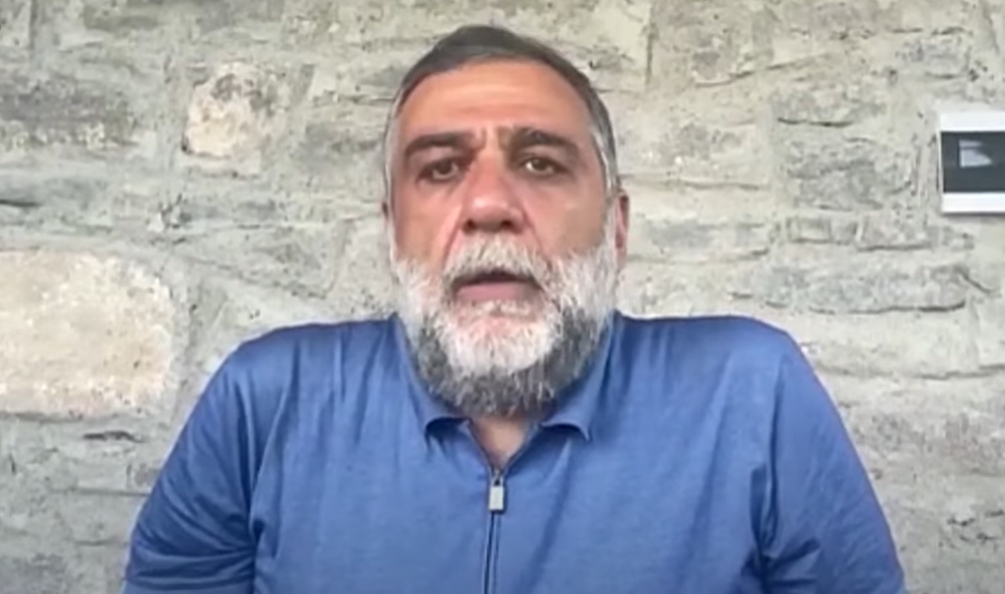
Ruben VARDANYAN: "When you are in blockade it is really important to be unified" (video)

23.08.2023 (
Caucasian Journal). Our today's interview is focusing on blockade of the Republic of Artsakh - an ongoing event in the Nagorno-Karabakh conflict, which left 120,000 people in the region without access to food, medicine and critical supplies.
We are sharing the interview with Ruben VARDANYAN, the Armenian politician who served as the State Minister of Artsakh (Nagorno-Karabakh) in 2022-2023, also known as a businessman and philanthropist. 

The region of Artsakh (also known as Nagorno-Karabakh) is disputed between Azerbaijan and the breakaway Republic of Artsakh, which has a majority ethnic Armenian population and is supported by neighboring Armenia.  

The eight-month blockade of Nagorno-Karabakh, started on 12 December 2022, has led to grave consequences as no supplies can come through. The first case of death from starvation was recorded in Artsakh earlier this month, according to the Office of the Human Rights Defender in the region. K. Hovhannisyan, a 40-year-old resident of Stepanakert, died as a result of chronic malnutrition and protein deficiency, states a report conducted by the human rights office.

To be the first to view all our exclusive video interviews, subscribe here to our YouTube Channel.

A historic step: Azerbaijani and Armenian journalists agree on the “Language of Peace”

30.04.2023 (Caucasian Journal). For the first time in 35 years, the Azerbaijani and Armenian journalists gathered at the same table during a workshop in Tbilisi. In a joint statement the journalists agreed to put a ban on “hate speech”.  See full text below.

Workshop on Peace and the Role of the Media in the South Caucasus Banner
In addition to participants  from Azerbaijan and Armenia, the unique workshop was attended by journalists from Turkey and Georgia, as observers.

On 28-29 April 2023 Tbilisi hosted "GJC Workshop on Peace and the Role of the Media in the South Caucasus". The event was organized under the leadership of the Global Journalism Council (GJC/KGK), the Turkey's leading international non-governmental organization in the field of mass media.

Mehmet Ali Dim, KGK Chairman (Turkey) made the opening speech of the workshop, stating that the workshop proposal came first from Azerbaijan. He said: “We have worked on this subject for 3-4 months. It was very difficult, but we succeeded. I would like to thank the Minister of Foreign Affairs of Turkey, Mevlüt Çavuşoğlu, who supported our efforts”. Mr. Dim stated that the determination of the peoples of the region for permanent peace has increased after the painful events experienced in the region during 35 years, especially after the second Karabakh war in 2020. "We met here today to talk about what we, journalists, can do to end a long and painful conflict. There is an urgent need for the language of peace in the media. I especially thank our colleagues from Azerbaijan and Armenia for their constructive behavior and I believe that at the end of this workshop, we will send a message of hope to the region and the world at a time when the world is experiencing great tensions.” 

Oliver MÜSER: "Humor is a promising approach to countering polarization"

03.01.2023 (Caucasian Journal) Happy New Year, and welcome to our holiday special interview! We hope you enjoy the comedy video (below) and the conversation with  Oliver MÜSER, Berlin-based political scientist and creator of the famous Dolma Diaries comedy series. 

Alexander KAFFKA, editor-in-chief of CJ: Dear Oliver, happy holidays and welcome to Caucasian Journal.  We decided to devote the special New Year’s interview edition to your comedy series – the Dolma Diaries. If someone has not seen the first episode about the Armenian-Azerbaijani-Georgian trio – just click on the video below and have fun. But the central question is – when shall we see the next episodes? What is needed to continue the series? 


Oliver MÜSER: Thank you very much for having me on this special edition! First of all let me say that me and the whole team behind the production are very happy that so many people enjoyed the pilot episode and are constantly asking about more episodes. I wish there was a clear answer to your question, but the boring truth is that it all depends on funding. We officially submitted the proposal for continuation to one donor organization so far and we are in talks with a few more, but I cannot say for sure if it will work out. I really hope we can go forward because we are extremely motivated to show more than just this first small glimpse of the story.

General Ben HODGES: "No way the US will pull out of NATO"

02.11.2020 (Caucasian Journal)  On the eve of U.S. presidential election, Caucasian Journal discusses the risk of America's withdrawing from NATO, verbalized recently by President Trump's former national security adviser. Though in Georgia it is also the election time, the NATO aspiration is not questioned by any party. But is NATO ready to accept new member?  
Our guest today is Lieutenant General (Retired) Ben HODGES, Pershing Chair in Strategic Studies at the Center for European Policy Analysis, Commander of United States Army Europe from 2014 to 2017.

Alexander KAFFKA, editor-in-chief of Caucasian Journal: Dear Ben, welcome to Caucasian Journal, many thanks for attention to our international readership. Obviously, one of our central discussion themes will be NATO-Georgia relationship. But let me start with something else, and even more fundamental: The NATO-USA relationship. President Trump’s former national security adviser John Bolton has more than once expressed his concern over a “very real risk” of the U.S. withdrawing from the North Atlantic Treaty Organization, if Donald Trump wins a second term. Can you comment on what seemed unthinkable? After all, 2020 had proved already that unthinkable things happen.

Lt. Gen. Ben HODGES:
No way the US will pull out of NATO, even if President Trump is re-elected. The Congress will oppose it, and I think that even the President realizes that the US needs allies, even if he doesn’t always say it or act like it. American prosperity as well as American security depends on a strong, stable, and prosperous Europe... That’s why we’ll remain committed to NATO, even if the President often says things about NATO that are unproductive. Of course it would also be helpful if other allies, particularly in Western Europe, would also demonstrate as much commitment to NATO as even the Trump administration has demonstrated. Despite the tweets, American boots on the ground in Europe have actually increased during this administration. I’d say that US commitment is far more tangible than some European allies. 
 

Professor Hüseyin BAĞCI: Turkey considers Azerbaijan as "one nation, two states"

14.10.2020 (Caucasian Journal) How is the political situation in South Caucasus - in particular, the Azerbaijani-Armenian conflict - seen from Turkey's perspective? What are current political priorities of the powerful neigbour? 
Caucasian Journal’s guest today is Professor Dr. Hüseyin BAĞCI - President of Turkey’s Foreign Policy Institute and professor at Middle East Technical University in Ankara. Professor Bağci is also Caucasian Journal's Board member.

Alexander KAFFKA, editor-in-chief of Caucasian Journal: Dear Professor Bağci, thank you for this opportunity to talk about foreign policies in our region, and the position of Turkey, which is of great importance to our countries. First of all, my sincere congratulations you with recent appointment as the head of Foreign Policy Institute (FPI) – Turkey’s oldest and most prestigious think tanks! It a great honour for us to have you in Caucasian Journal’s Board. So, how does it feel to become a leader of this think tank, after many years of university teaching?

Hüseyin BAĞCI: Thank you very much. Indeed, it is a very good feeling, but also an intellectual responsibility to lead such an institute. I have been involved in the activities of FPI since late 1980’s and was deputy director. But now, of course, it is a new field of responsibility. We contribute to main stream debates on Turkish foreign and security nationally and internationally.
 

In case you missed it: Interview with Gunda TIRE on school reform and PISA ratings of school children

01.09.2020 (Caucasian Journal).  As September 1st is first day of school in many countries, Caucasian Journal decided to re-post our article on education, which we consider quite important. So, in case you missed it in winter, below we talk not only about the best school reform experience, but also why South Caucasus is lagging behind. This type of articles do not lose their value with time, alas.

Education is basic for achieving progress in any other direction.  But how do South Caucasian students compare with peers? How well can they read?

It is our pleasure to introduce Ms. Gunda TIRE, PISA National Project Manager at Foundation Innove. PISA is the OECD's Programme for International Student Assessment, and Innove is an education competence center in Estonia. The reason why we invited an expert from Estonia is simple: Because Estonian students are the best in Europe. 
Read the Georgian language version here.

Alexander KAFFKA, editor-in-chief of CJ:  Indeed, according to recent PISA worldwide student assessment results, the Estonian 15-year olds have the Europe’s highest scores in all disciplines. First of all, please accept our sincere congratulations to Estonian friends with this excellent achievement! I know it was not unexpected, since Estonia’s results have been going up for some time, but anyway how was the top achievement perceived - by ordinary people and by professionals?

Gunda TIRE:  Thank you very much for the kind words, and we really appreciate your invitation to share the Estonian PISA experience with your readers!

Sebastian MOLINEUS (video): "Digital economy is key driver for growth and a critical aspect of response to COVID"

25.08.2020 (Caucasian Journal)  What is the main focus of World Bank's activities in the South Caucasus? What type of investment projects are in especial demand in our region? How did Georgia's COVID response influence the  business environment?

Our today's video discussion with Mr. Sebastian MOLINEUS centers around these questions. Mr. Molineus, World Bank Regional Director for the South Caucasus, is already well known to readers of Caucasian Journal. 

Today for the first time we are pleased to offer his interview in a video format.

Watch video interview with Sebastian MOLINEUS below.

To be first to view all our exclusive video interviews, please subscribe here to our YouTube Channel.


Dr. Andreas UMLAND on escalation of Armenian-Azerbaijani conflict and Russia's role

20.07.2020 Dr. Andreas UMLAND is Senior Expert at the Ukrainian Institute for the Future in Kyiv, Nonresident Fellow at the Institute of International Relations in Prague and Swedish Institute of International Affairs in Stockholm.  Speaking to Caucasus Watch, he shared his expert views on the escalation of the Armenian-Azerbaijani conflict and Russia's role in the territorial disputes of the Caucasus.

First of all, the obvious question, why is the conflict between Armenia and Azerbaijan escalating right now and why on the undisputed international border instead of the area of the actual territorial dispute?

Dr. Andreas UMLAND: This is indeed surprising since the official border between Armenia and Azerbaijan is not being questioned by either side. The actual territorial dispute has been only about Nagorno-Karabakh and the surrounding areas. Murad Muradov and Rusif Huseynov of the Topchubashov Center at Baku have published an article on the influential Ukrainian website Ukrainska Pravda where they speculate about reasons for the escalation. They argue that only Armenia can be assumed to be responsible for the escalation on the Armenian-Azerbaijani border because of the high risks the conflict contains for Azerbaijan, in view of Armenia’s membership in the Collective Security Treaty Organization (CSTO). Armenia and the official Armenian territory are protected by the CSTO – and especially so by Russia. Therefore, Muradov and Huseynov believe that this provocation originated in Armenia, and they outline some possible scenarios. Among others, Muradov and Huseynov argue that the escalation could have been driven by the current government in Armenia. However, they also do not exclude the possibility that the clash could have been initiated by some old elites in Armenia, particularly by the former pro-Russian presidents Kocharyan and Sarkisyan, who may be trying to cause trouble for the current government.

Dr. Laurence BROERS: "There won’t be Armenian-Azerbaijani Dayton*"

27.05.2020 (Caucasian Journal) Caucasian Journal talks with Dr. Laurence BROERS, well-known expert on conflicts in the South Caucasus with over 20 years’ experience, both as a researcher and a practitioner of peacebuilding initiatives in the region. 
Laurence BROERS
Dr. Broers is the Caucasus programme director at London-based NGO Conciliation Resources. He is Associate Fellow at Royal Institute of International Affairs (Chatham House), author or editor of several books, including Armenia and Azerbaijan: Anatomy of a Rivalry, and co-editor-in-chief of Caucasus Survey.

Alexander KAFFKA, editor-in-chief of Caucasian Journal:  Dear Dr. Broers, welcome to Caucasian Journal. We’ve wanted to talk with you since a long while, and today we have this lucky possibility thanks to an important development – the release of a new documentary about the Karabakh conflict between Armenia and Azerbaijan (to watch video, scroll down to page bottom). You have agreed to introduce this film for our readers. Allow my first question – how do you visualize the target viewers group of the documentary?

Laurence BROERS: On 12 May we released online a documentary film called Parts of a Circle: History of the Karabakh Conflict. The film chronicles the disputed history of more than 30 years of this conflict, in an Armenian-Azerbaijani co-production. It is a locally led project, in which the scripts were written, interviewees selected and films produced by local teams of Armenian and Azerbaijani journalists. The project actually began in 2011 but for a number of reasons it has taken until now to be ready for the public release. The film we have recently released is actually a shorter version, at 76 minutes, of a longer 3-hour trilogy. The short film is in English, and it is intended for an international audience that is not necessarily familiar with the Karabakh conflict. The longer trilogy has considerably more detail and is intended more for a local and a specialist audience.

Caucasian Journal offers free advertising as support for businesses, calls for other mass medias to join

We know that many businesses – both small and big – are impacted by the outbreak of Covid-19. Many companies face a long road ahead as they try to rebuild themselves following the lockdown. In this difficult time, we believe that businesses must show maximum support to each other.

We’ve listened to businesses to understand how we can support them. Caucasian Journal and its sister business news sites decided to give companies struggling in the wake of the Covid-19 pandemic free advertising.

Today we are glad to announce that from 22 May all the companies in Georgia, Armenia, Azerbaijan will be eligible to apply for free banner advertising to use across the Caucasian Journal and our sister business news sites.