Two years of Covid in South Caucasus at a glance

18.12.2021 (Caucasian Journal). As the world is approaching 2 years of Covid pandemics, Caucasian Journal is posting a comparison of Covid-19 situations across the South Caucasus region. 
The graphs are per capita, so they give an objective picture of success/failure in fighting the pandemics. We will also seek for expert opinions to comment on the trends, so this post is to be updated. 


University of Zürich offers paid fellowship opportunities for research on South Caucasus

17.12.2021 (Caucasian Journal). For the spring semester of 2022, the Center for Eastern European Studies (CEES) at the University of Zurich offers up to five residential fellowships to highly talented and innovative young or mid-career scholars from the field of social sciences or humanities. 

Applicants with research focused on South Caucasus are particularly encouraged.  "While we welcome research proposals on all topics related to the study of Eastern Europe and post-Soviet Eurasia, for the fall spring 2022 Fellowship Program, we are particularly interested in applications from scholars with an interest in geopolitical trends, economic connectivity and/or transnational social and/or cultural issues related to South Caucasus region", - reads the call for applications. 

Funding includes accommodation, health insurance, visa support, and a stipend for living expenses during the period of stay of up to four months.  The deadline of application is January 15, 2022.  Application details are here.

Nick BERESFORD: "We need to keep up momentum to achieve prosperity underpinned by democratic institutions and the rule of law"

13.12.2021 (Caucasian Journal) “This is a critical moment for the world, and for development”, - according to the head of United Nations Development Programme (UNDP). 
What is happening to the UN’s Sustainable Development Goals (SDGs) now? What is happening to the development of Georgia, and what place does the country occupy in the bigger picture of global development? 
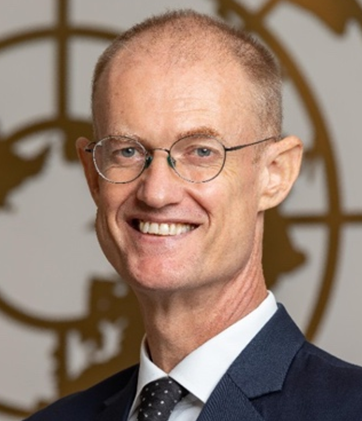
Today Caucasian Journal is discussing these issues with Mr. Nick BERESFORD, recently appointed Resident Representative of UNDP in Georgia.  Previously he has served for the UN in Bangladesh, Somalia, East Timor, and at headquarters in New York.

Alexander KAFFKA, editor-in-chief of CJ:  Dear Mr. Beresford, welcome to Georgia.  The SDG themes have been always in the focus of Caucasian Journal, as they were essentially our priority topics since launch. So I believe we are now ripe enough for a conversation with UNDP’s country representative, and let me thank you for attention to our readers. Before Georgia, you worked in some of the world’s poorest countries – it must have been a big challenge, but also a great experience for a development professional?

Nick BERESFORD: I have been very lucky to have worked in some amazing countries and with some wonderful people. In Bangladesh for example UNDP has a programme with women led community groups in one of the world’s largest slums. These women activists led their communities in proving a living, putting kids through school, and making political alliances with Mayors and local councilors to get services their families need. In Somalia I worked with coastal communities as they recovered from piracy, setting up local government and creating small businesses. You learn a lot as a development professional in these partnerships and even if progress is often slow or marginal, it’s wonderful to see some positive change where it’s most needed.

Caroline von POST: “Why do we dress babies in brand new clothes that are full of chemicals?”

06.12.2021 (Caucasian Journal). Does a “100% cotton” label always mean that the garments (or linens, towels, etc) are safe to use?  Are second-hand clothes better for a baby? How a business can use waste to manufacture top quality product and generate profit? Why is this relevant to hotels? What is ethical about recycling?

These are some questions which we have for our new guest - Caroline von POST (Sweden), a biologist, circular economy consultant, and head of an aptly-named company, Stormie Poodle.

▶ ქართულად: Read the Georgian version here.

▶ Հայերեն: Read the Armenian version here.


Alexander KAFFKA, editor-in-chief of CJ:  Dear Caroline, welcome to Caucasian Journal, and greetings from South Caucasus. This region is known for natural beauty, rich history and hospitality, and it is small wonder that tourism is one of our main backbones. As you can guess, I’m about to ask about the hotels. Is it true that you know a “magic” way for hotels to become more environmentally friendly, reduce waste, and make profit?

Caroline von POST: Haha, of course, they could let me help them! No seriously, it’s a complicated thing, running a hotel. Positioning your brand, employing the right staff who can represent the hotel in a positive manner, cooking great food, decorating the rooms etc… so many things to think about. While I have helped hotels become more environmentally friendly prior to launching Stormie Poodle, my business now focuses on the textiles that are used by the hotel and “upcycling” those textiles to – as you say – reduce waste, become more environmentally friendly, and increase profits.

Your country seems like a very beautiful place with so much biodiversity and amazing mountains.  I hope I get the chance to visit it one day. 

Ambassador Kirsti NARINEN: "Finland is a constructive and flexible partner, a peace-contributing international actor"

25.11.2021 (
Caucasian Journal). The majority of Georgians are aspiring to fully join the European family of nations, but how is this process viewed from the Europe’s side? We discuss this and other questions with Her Excellency Kirsti NARINEN, the new Roving Ambassador of Finland for the South Caucasus. We are delighted to add that today Caucasian Journal is launching our Armenian language version,  and this interview is the first one translated to two South Caucasian languages - Georgian and Armenian. 

▶ ქართულად: Read the Georgian version here.

▶ Հայերեն: 
Read the Armenian version here.

Alexander KAFFKA, editor-in-chief of CJ:  Dear Kirsti, welcome to the Caucasus and to Caucasian Journal! Though just several weeks ago you had a chance to officially present your credentials in Georgia, you were involved in South Caucasian affairs as a Roving Ambassador for a long time; and now you are back from Rustavi where you observed the elections. So, we have a lot to discuss. But let’s start with explaining your position to our readers. What does it mean to be a Roving Ambassador?

Kirsti NARINEN: I would like to start with warm thanks to Caucasian Journal and you, Alexander, for keeping Nordic-Baltic themes high on your agenda! Nordic-Baltic countries have strong societies, even stronger civil societies and share many societal processes - which you have reported on. Those themes could act as well-working examples to other small European countries, within and outside the European Union. I feel honored to be able to continue your sequence and have this conversation with you.

Opportunity for Georgians to study in Norway: Scholarship Program for Master of Science in hydropower development

Norwegian Water Resources and Energy Directorate, through the Ministry of Economy and Sustainable Development of Georgia, offers four scholarships to Georgians who want to study Hydropower development at the master’s level at Norwegian University of Science and Technology (NTNU) in Trondheim/Norway. Scholarships are tenable for the two-year master programme starting in 2022.

▶ ქართულად: The Georgian text version is here.

Georgia and Norway – two hydropower countries

About 80 percent of Georgia’s electricity demand is covered by local hydropower plants. The construction of hydro power plants in Georgia has a long tradition, which has been reactivated in recent years. Both large power plants with reservoirs and small hydropower plants are under construction or being planned. Read more: Bjorn BRANDTZAEG: "As Georgia develops, it needs more domestically generated electricity".

Norway has a long tradition in developing hydropower. Hydropower is the mainstay of the Norwegian electricity system. Norway has 1660 hydropower plants, which accounts for 31 837 or 96 % of total installed capacity. Norway and NTNU has developed competence at the highest international level within environmentally friendly development and operation of hydropower plants. 

Caucasian Journal to host first Georgian-Norwegian Nordic Talk on hydropower education

09.11.2021 (Caucasian Journal).  If you are interested in clean energy, hydropower, SDG, or international student exchange programs, we have the pleasure to invite you to the first Georgian-Norwegian Nordic Talk. You are welcome to attend our two Zoom sessions on November 15-16 (details are below). 

Our discussion focusing on clean energy education is entitled "How to make maximum of Nordic clean energy knowledge? Case of Norway and Georgia – two “hydropower nations”.

What is a Nordic Talk? Nordic Talks is a series of live talks and podcasts addressing the biggest global challenges. "Through conversations with some of the brightest minds in the Nordics and their counterparts from around the world we want to inspire each other to act – for a better, more sustainable future", - reads the official description. 

The  first Georgian-Norwegian Nordic Talk, organized by Caucasian Journal,  will consist of two Zoom sessions with open attendance. The agenda and speakers are as follows:

How to make maximum of Nordic clean energy knowledge? Case of Norway and Georgia – two “hydropower nations”

Talk 1  –  November 15, 14:00 Oslo time / 17:00 Tbilisi time.
Clean Energy: A fundamental UN SDG, and its importance for economies and sustainable development of Norway and Georgia – two “hydropower nations”. 
How to attend: Zoom linkFacebook event linkMeeting ID: 920 2531 3281.

Petter SVAETICHIN: “Georgians are traditionally strong in the main AI subjects of mathematics and physics”


30.07.2021 (Caucasian Journal). Artificial Intelligence (AI) is one of the most advanced fields of IT, the core of many innovations that are changing our everyday lives. Can Georgia be a significant player in hi-tech? “Yes, it can”, - says our today’s guest Petter SVAETICHIN, CEO at Tbilisi-based artificial intelligence company Neiron. The Swedish business executive with a huge professional experience in Georgia is sharing some valuable insights with our readers.

▶ ქართულად: 
Read the Georgian version here.

Alexander KAFFKA, editor-in-chief of CJ:  Dear Petter, welcome to Caucasian Journal!  You are one of the most prominent Swedish businesspeople working in Georgia for quite a while - since early 2000-s, if I’m correct. So, for our series of interviews with Nordic and Baltic experts you are a priceless speaker, with your vast experience of life and work in South Caucasus – from traditional industry such as wine-making to absolute “cutting edge” such as artificial intelligence.  But first of all, how a Swede with a diploma from a prestigious American private school finds oneself in Georgia?

Petter SVAETICHIN: Thank you. Yes, you and I have crossed paths over the years and it seems that our interests often coincide. My being in Georgia was from the beginning a stroke of luck and coincidence but later a matter of appreciation and love for the country as well as an interest in the various possibilities and opportunities present. After graduating from ESSEC University in Paris and Cornell University in New York, I started working on projects for a private Swedish investor and one of his challenges was the revival of Chateau Mukhrani vineyards, and to restore this  Royal heritage to its former glory and make it a “must go and must taste” destination for visitors. When I started it was just a ruin with a few hundred visitors a year. In 2019 Chateau Mukhrani received in excess of 60,000 guests. After having been a member of the board since 2005, I moved here in late 2010 and was running the development. GWS vineyards in Telavi and Marussia Georgia later formed a group with Chateau Mukhrani. Some years ago I completely changed direction when my cousin, who is another Swede living in Georgia, asked me to assume the leadership of his Artificial Intelligence company Neiron. Since 2019 I am therefore working on developing AI in Georgia and from Georgia.   

Jānis IKSTENS: “Interest from Georgian students in studying in Riga is very high”


25.07.2021 (Caucasian Journal). Caucasian Journal’s guest today is Dr. Jānis IKSTENS, Acting Rector and Chairman of the Board at Riga Graduate School of Law.

▶ ქართულად: 
Read the Georgian version here.

Alexander KAFFKA, editor-in-chief of CJ:  Welcome to Caucasian Journal – we are pleased to greet you as our first speaker from Latvia; it is even more symbolic that you are the first representative of higher education sphere.  You have been the head of Riga Graduate School of Law since 2017, if I’m correct. Would you like to introduce RGSL, by highlighting what you consider most important?

Jānis IKSTENS: Riga Graduate School of Law (RGSL) was founded in 1998 in cooperation between Latvia and Sweden in order to assist Latvia in preparing for work in the European institutions. RGSL was inaugurated in 2001 by President of Latvia Vaira Vīķe-Freiberga and Crown Princess of Sweden Victoria, who also awarded diplomas to the very first graduates. 

At the beginning, RGSL offered only Masters degrees, two Bachelor programmes – “Law and Business” and “Law and Diplomacy” were introduced in 2014. Since then, they have gained popularity among young people in Latvia and also abroad – we have students and faculty from more than 30 countries studying and teaching in Riga. 

Ambassador Gert ANTSU: ”At times reforms sound like a tired buzzword that has lost its luster”

18.07.2021 (Caucasian Journal).  The today’s guest of Caucasian Journal is Mr. Gert ANTSU,  Director of the Estonian Center of Eastern Partnership and Special Representative of the Ministry of Foreign Affairs for the Eastern Partnership. 

The Eastern Partnership (EaP) is a joint policy initiative which aims to deepen and strengthen relations between the European Union and its six Eastern neighbours: Armenia, Azerbaijan, Belarus, Georgia, Moldova and Ukraine. EaP was inaugurated in 2009.

▶ ქართულად: 
Read the Georgian version here.

Alexander KAFFKA, editor-in-chief of CJ:  Welcome to Caucasian Journal, thank you for attention to our readers. We often talk about successful European reform experiences and best practices, and whether they can be used in our region. But our today’s theme is a special case: We discuss the Eastern Partnership, which is in fact all about applying the EU approaches in our neighborhood. Let me start with a conceptual question: Who is the main driving force in this process – in theory it must be the Eastern side, not EU? Or, is it different for each EaP country, which are so dissimilar? 

Gert ANTSU: It is a conceptually interesting question. If we talk about partnership, then by definition it needs a strong interest from both sides to work. At the same time we can see that there is more urgency on the side of the EaP countries, especially those who have declared their European ambitions – people want better livelihoods, better governance in their countries and they understand that closer relations with the EU are a key to reach those ends. Then again, these countries do not stress as much the multilateral Eastern Partnership as their own bilateral relationship and integration with the EU. However, viewed from the EU’s side, everything one does with EaP countries, bilaterally or all together, is Eastern Partnership, so there is no contradiction here.