Showing posts with label Human Rights. Show all posts

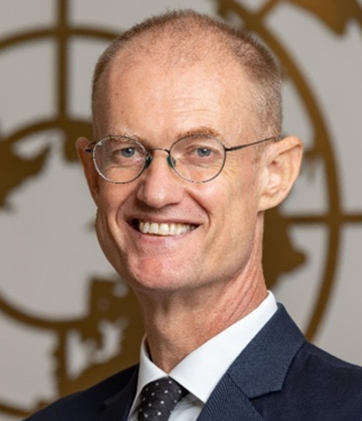
Siim SIKKUT: "More e-Residents are joining than our babies are born in the country" (read or watch video)

11.05.2022 (Caucasian Journal). Our guest is Siim SIKKUT, co-founder of the famous Estonian e-Residency program and the former Chief Information Officer of Estonian government. He is considered one of the pioneers of “e-Estonia” – one of the most advanced digital nations. You may view the video discussion below, and read the text version - further below.  This interview is also available in Georgian and Armenian versions:

▶ ქართულად: Video subtitled in Georgian is here. Georgian text version is here.
▶ Հայերեն: Video subtitled in Armenian is here. Armenian text is here.

To be the first to view exclusive interviews, please subscribe here to our YouTube Channel


The text version of interview is below: 

Siim SIKKUT: "More e-Residents are joining than our babies are born in the country"

Alexander KAFFKA, editor-in-chief of CJ: Hello and welcome to Caucasian Journal video interviews! Our guest today is Siim SIKKUT, co-founder of the famous Estonian e-Residency program and the former Chief Information Officer of Estonian government. He is considered one of the pioneers of “e-Estonia” – one of the most advanced digital nations.

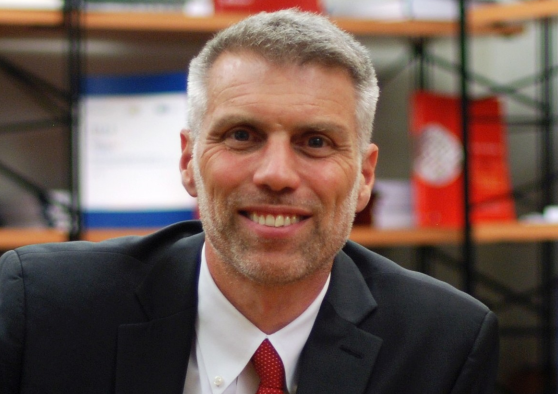
Tarmo JÜRISTO, founder of SALK: “Estonia is a lottery winner” (video)

14.04.2022 (Caucasian Journal).We are glad to introduce our today's guest Tarmo JÜRISTO, Estonian civil society activist and opinion leader, founder of the new civic platform SALK, former CEO of think-tank "Praxis". You may view the video discussion below.  This video interview is also available in Georgian and Armenian versions: 

▶ ქართულად: Video subtitled in Georgian is here.

▶ Հայերեն: 
Video subtitled in Armenian is here.

To be first to view all our exclusive video interviews, please subscribe here to our YouTube Channel 


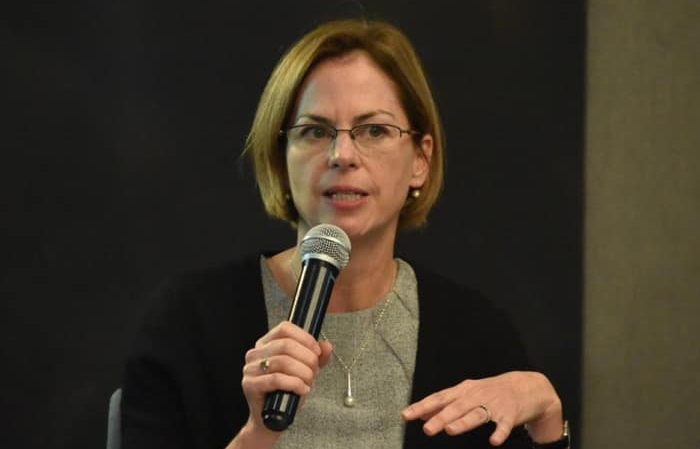
Video: Kristina MÄND and Kristina REINSALU from e-Governance Academy discuss e-democracy

15.02.2022 (Caucasian Journal). Today at Caucasian Journal we are talking about e-government and e-democracy. Our guests from e-Governance Academy (eGA) in Estonia are Kristina MÄND, Senior Expert on e-Democracy, and Dr. Kristina REINSALU, Programme Director at eGA. They kindly agreed to meet with CJ during recent visit to Tbilisi. 
You may view the video discussion below.  

This video interview is also available in Georgian and Armenian versions:

▶ ქართულად: Video subtitled in Georgian is here.

▶ Հայերեն: 
Video subtitled in Armenian is here.

To be first to view all our exclusive video interviews, please subscribe here to our YouTube Channel.


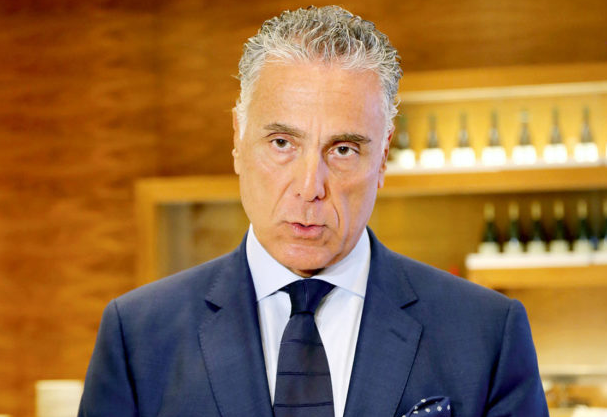
Nick BERESFORD: "We need to keep up momentum to achieve prosperity underpinned by democratic institutions and the rule of law"

13.12.2021 (Caucasian Journal) “This is a critical moment for the world, and for development”, - according to the head of United Nations Development Programme (UNDP). 
What is happening to the UN’s Sustainable Development Goals (SDGs) now? What is happening to the development of Georgia, and what place does the country occupy in the bigger picture of global development? 
Today Caucasian Journal is discussing these issues with Mr. Nick BERESFORD, recently appointed Resident Representative of UNDP in Georgia.  Previously he has served for the UN in Bangladesh, Somalia, East Timor, and at headquarters in New York.

Alexander KAFFKA, editor-in-chief of CJ:  Dear Mr. Beresford, welcome to Georgia.  The SDG themes have been always in the focus of Caucasian Journal, as they were essentially our priority topics since launch. So I believe we are now ripe enough for a conversation with UNDP’s country representative, and let me thank you for attention to our readers. Before Georgia, you worked in some of the world’s poorest countries – it must have been a big challenge, but also a great experience for a development professional?

Nick BERESFORD: I have been very lucky to have worked in some amazing countries and with some wonderful people. In Bangladesh for example UNDP has a programme with women led community groups in one of the world’s largest slums. These women activists led their communities in proving a living, putting kids through school, and making political alliances with Mayors and local councilors to get services their families need. In Somalia I worked with coastal communities as they recovered from piracy, setting up local government and creating small businesses. You learn a lot as a development professional in these partnerships and even if progress is often slow or marginal, it’s wonderful to see some positive change where it’s most needed.

Inka HOPSU, Member of Finnish Parliament: “I'm happy I was able to participate in politics as a woman with small babies”

Photo: Hanne Salonen / Finnish Parliament
14.07.2021 (Caucasian Journal). Caucasian Journal’s guest today is Ms. Inka HOPSU – Finnish politician, member of Parliament for the Green League.

▶ ქართულად: 
Read the Georgian version here.

Alexander KAFFKA, editor-in-chief of CJ:  Welcome to Caucasian Journal! Your career is remarkable in so many ways.  Being a mother of four, you managed to become a parliamentarian. You were a teacher and now you are a “green” politician. You seem like a role model for everyone, who wants to make life better in his or her city or community.  We are delighted to get such as a guest as you for an interview, and have prepared many essential questions. Let me start with this: Have you ever thought about yourself as a role model? Maybe your teaching experience has prepared you for such a role long time ago?

Inka HOPSU: Even before teaching, I was a scout leader for many years, first responsible of smaller groups, then working in the board of national organization and in international tasks. I think these prepared me to take responsibility and to be an example of a good and motivating leader for many young people. I think the role of civil society in preparing for leadership tasks in politics is very essential.

Video: Kristina KALLAS and Arnold STEPANIAN discuss national minority policies in Estonia and Georgia

11.07.2021 (Caucasian Journal). Today at Caucasian Journal we are talking about the national minorities policies in Georgia and Estonia. Our guests are Arnold STEPANIAN, Chairman of Public Movement “Multinational Georgia”, and Kristina KALLAS, Research Fellow at Tartu University Narva College, and leader of political party “Estonia 200”.
The interview is available in video format with Georgian subtitles, and as text version - in two languages.  You may view the video discussion below. 

The full text of this interview is also available in English and Georgian:
▶ ქართულად: The Georgian text version is here.
▶ English text version is here.

To be first to view all our exclusive video interviews, please subscribe here to our YouTube Channel.


Kristina KALLAS and Arnold STEPANIAN discuss national minority policies in Estonia and Georgia

11.07.2021 (Caucasian Journal). Today at Caucasian Journal we talk about the national minorities policies in Georgia and Estonia. Our guests are Arnold STEPANIAN, Chairman of Public Movement “Multinational Georgia” (PMMG), and Kristina KALLAS, Research Fellow at Tartu University Narva College, leader of political party “Estonia 200”.
Our  interview can be watched or read in two languages. Below we present the full English text version of interview. 

▶ ქართულად: The Georgian text version is here. 
▶ For video version, click here.

Alexander KAFFKA, editor-in-chief of CJ: Hello and welcome to Caucasian Journal’s video interviews! Our guests today are well-known experts in national minorities issues from Estonia and Georgia: Arnold STEPANIAN, Chairman of Public Movement “Multinational Georgia”, and Kristina KALLAS, Research Fellow at Tartu University Narva College, and leader of political party “Estonia 200”, who joins us online from Estonia. Dear Arnold, is it true that “Multinational Georgia” is one of the oldest NGOs in Georgia?

Arnold STEPANIAN: Hello first of all, yes we are one of the oldest NGOs - we were established in 1999. If I remember correctly, there were not more than 20-25 NGOs at that time.

Laura Thornton: "Democratic backsliding is like the pandemic. It is contagious"

21.05.2021 (Caucasian Journal) Caucasian Journal’s guest today is Ms. Laura THORNTON, Director of the Alliance for Securing Democracy at German Marshall Fund. We are proud to add that Laura is our journal’s good friend and member of our Board. 

Alexander KAFFKA, editor-in-chief of Caucasian Journal: Dear Laura, it is always a pleasure to meet you – virtually for the time being, but maybe also in person before long:  I know that you are planning to be back to Georgia soon. You have worked in Tbilisi for a long period as the head of National Democratic Institute, so you are one of the most competent international experts when it comes to Georgia’s politics and sociology. What’s your attitude to Georgia now, and will you be visiting us this time as an expert? 
 
Laura THORNTON: Well, I am not sure I am an expert, just an interested observer! My attitude toward Georgia is always one of hopeful optimism and desire for the country’s success. I believe Georgia faces similar challenges to many other places, including my own country. There is an alarming rise of authoritarian threats – both external and internal – which is impacting the quality of our democratic function. Deep polarization is paralyzing governance and thwarting democracy’s ability to deliver, which drives people into the arms of illiberal forces. Information integrity is the subtext of much of this, with disinformation efforts sowing discontent and exacerbating divisions. As I’ve said before, democracy is Georgia’s greatest asset and I believe in Georgian democrats to overcome these challenges by supporting pluralism, checks and balances, a robust civil society, and rule of law.

“In Sweden, term “housewife” doesn't exist anymore”: Niklas LÖFGREN and Tiina BRUNO talk about paid parental leave and gender equality

18.04.2021 (Caucasian Journal). Is it good for the babies to stay at home with fathers? What are the benefits of gender equality? How generous are benefits paid to Swedish parents by the government? How are private companies motivated to contribute?

Within the framework of Caucasian Journal’s Best Nordic and Baltic Practice Program, our guests today are Niklas LÖFGREN, Spokesperson for family economics at Swedish Social Insurance Agency (Försäkringskassan) and Tiina BRUNO, a senior advisor and lecturer in methods for increasing gender equality, social sustainability and inclusion in companies and societies, CEO of the consultancy firm Föräldrasmart Sverige and founder of the concept Parentsmart Employers. 

▶ ქართულად:  The Georgian text version is here. 

Alexander KAFFKA, editor-in-chief of Caucasian Journal:  
Sweden was the first country in the world to introduce a parental leave giving both parents the same possibilities of staying at home with their child. I believe this happened in 1974, correct? In a few years you will mark 50th anniversary of this reform, which seems revolutionary even by the today’s standards. How effectively did it perform over the years?

Niklas LOFGREN: The first years after the 1974 reform was introduced men in Sweden were reluctant to use parental benefit even though they could. The right was equal but you could also give away that right to the other parent, and most fathers wanted to do just that. The first year 99,5% of all days were paid out to women and only 0,5% were paid out to men. The development towards an equal usage went slowly, and after 20 years it still was only a 90/10 split. That’s why the government introduced 30 days that you had to use yourself as a parent. It was “use them or lose them” 30 days. This was a small kick in the butt for the reform which increased the speed towards a more equal usage. From one year to another, more children got more fathers staying home with parental benefit, and also for a longer period of time. 

Tina KHIDASHELI and Kristin Krohn DEVOLD (video): Female Defense Ministers from Georgia and Norway discuss NATO, gender, civil society

08.03.2021 (Caucasian Journal). On the eve of International Women's Day, Caucasian Journal has interviewed two female defense ministers and NGO leaders – Tina KHIDASHELI (Georgia) and Kristin Krohn DEVOLD (Norway), who discuss a wide range of issues - from NATO to gender equality.  You may view the video discussion below. 
The full text of this double interview is also available in English and Georgian:
▶ ქართულად: The Georgian text version is here. 
▶ English text version is here. 

To be first to view all our exclusive video interviews, please subscribe here to our YouTube Channel.


Zaza BIBILASHVILI: "Democratic backsliding is evident"

Zaza BIBILASHVILI:27.07.2020 (Caucasian Journal)  How is the political and economic situation in Georgia seen from a viewpoint of one of the country's leading  professional lawyers?  

Today Caucasian Journal is pleased to present the answers given by  Zaza BIBILASHVILI, Senior Partner at BGI Legal, Georgia’s leading independent law firm, and founder of the Chavchavadze Center for European Studies and Civic Education. 

Alexander KAFFKA, editor-in-chief of Caucasian Journal: Dear Zaza, thank you for being with us, and for your attention to Caucasian Journal – we are privileged to have you among our Board members. Let me start with what I consider central. You possess a rare - if not ideal - combination of professional and personal qualities, which make you equal to political challenge of any caliber. Recently you left UNM - the party, which you joined in 2013, and where you held a senior position. You said you would not associate with any other political force or take part in the 2020 elections. I am sure you had important reasons, but what will remain on the plate for the voter, if all the very best professionals would decide to step away?

Zaza BIBILASHVILI: Alex, thank you for inviting me for this interview. The honor is all mine to be on CJ board along with such distinguished group of individuals. Let me start by wishing you and Caucasian Journal all the best. I know there are quite a few new ideas and plans for the immediate future. Look forward to seeing the Journal grow! On to your question: 

I joined UNM in 2013. Georgia’s former ruling party had already lost the 2012 parliamentary elections. It was widely demonized, its members were targeted politically and persecuted by all branches of government. Hundreds were jailed or forced to flee Georgia, and thousands were pressured in various ways. Against this background, many struggled to explain my move – in a country where people are quick to switch camps to join the winner, it is rare to see a successful citizen, who had never been part of the government and with no vested interest, to risk it all for no apparent gain. 

Seth CHAR: "It’s easy to start a business in Georgia but difficult to make it work"

23.07.2020 (Caucasian Journal)  Our guest today is Mr. Seth BLY-CHAR, CEO of ICONIA Capital, a real estate developer based in Tbilisi but owned by U.S. investors. (Read Georgian version here.)

Alexander KAFFKA, editor-in-chief of Caucasian Journal:  Dear Seth, welcome to Caucasian Journal! Our guests often talk about the importance of foreign investments for Georgia, the”investment climate”, “ease of doing business”, and other pretty abstract notions.  But today we have a chance to touch the practical side of things:  The hands-on experience of an American investor in Georgia. The fact that your experience is “mixed” makes it even more valuable to readers. For a start, can you give a short answer: Do you regret about investing your money in Georgia? If you could go back to 2015, would you rather have taken your investment elsewhere?

Seth CHAR: Mr. Kaffka, firstly, thank you for this opportunity to interview with your prestigious publication.  You had mentioned that our investor experience in Georgia was “mixed,” but in reality, it is only “mixed” on the best of days: overall, our experience in Georgia over the past five years has been overwhelmingly negative. 

Laura THORNTON: “How does democracy work six feet apart?“

The corona virus has disrupted virtually all aspects of our lives and there is much speculation about both the effectiveness of democracy to handle the crisis and the impact the virus will have on democratic institutions and processes in the short and long term.  

11.04.2020 (Caucasian Journal). For an expert opinion on this subject Caucasian Journal has turned to Laura THORNTON, Director for Global Programme at Stockholm-based International Institute for Democracy and Electoral Assistance. Until recently Laura has headed National Democratic Institute in Tbilisi, and is well known in our region. She is also a frequent guest of СJ (see her other interviews here).

Alexander KAFFKA, editor-in-chief of CJ: Much has been said about autocracies being “better equipped” to handle corona due to their ability to take draconian measures. How would you respond to this? 

LT: Yes, there is plenty of bemoaning the inability of democracies to quickly adopt the tough measures, including limiting freedoms, to address the virus, the assumption being that non- or hybrid- democracies do this more effectively as they are not hindered by checks or bureaucracy, like China and Singapore. This position is, of course, swiftly countered by those pointing out the successes of democracies like Germany, Taiwan, and South Korea, where immediate and efficient actions – including large scale testing, tracking, and isolating cases – have proven effective. There is also evidence of established democracies crippled by incompetence and bureaucracy. Successful responses reflect mostly the competence and efficacy of states and, in my view, provide a more compelling case than ever for good governance – efficient, nimble, responsive, transparent, and organized.

Anita LINDAHL TROSDAHL: "Citizens can raise any question at "speed dates" with Oslo government including Mayor"

BNBP08.04.2020 (Caucasian Journal). Caucasian Journal continues its new program of interviews with high-level practitioners from Western Europe who share knowledge in areas most relevant to our region.  Today we talk about big city problems.

How quickly an industrial city can transform into a leader in environmental protection and clean hi-tech? Which secret city management mechanisms are needed? How do citizens participate?
ANITA LINDAHL TROSDAHL
Raymond JOHANSEN, Governing Mayor of Oslo - European Green Capital 2019, kindly agreed to give interview to us, but due to COVID crisis it was postponed. We are thankful to Anita LINDAHL TROSDAHL, Project Manager of Oslo European Green Capital 2019 at the Mayor's Office, who proposed to answer most of our questions.

Alexander KAFFKA, editor-in-chief of CJ: In 2019 your city - Oslo - was awarded the title of Europe's Green Capital. Congratulations! Do you think that greening of Oslo is your most important achievement?

ANITA LINDAHL TROSDAHL: I am very proud of Oslo’s European Green Capital title. This is a result of a long-term effort from citizens, companies and public sector. I believe that politicians in Oslo have made many good decisions over two-three decades. Recently we continue to see good environmental results. The buses run more frequently, the car traffic is going down and the air is cleaner. Greenhouse gas emissions are going down, and investment are made to ensure that they continue to go down. In addition to green policies, I am very proud that Oslo is home to every fourth new green job created in Norway. A true sustainable city must be green, socially inclusive and economically viable.
Table 1
Click to enlarge

AK:  Air quality is a very important concern for big cities in South Caucasian region. In the chart you can see how Georgia, Armenia, and Azerbaijan rate in Global Environmental Performance Index (EPI) in comparison to each other and to Norway. Do I understand correctly that your Municipality is legally responsible for keeping good air quality in the city? If air pollution reaches a certain level, it means you commit a crime? 

ALT: Norway is legally responsible for keeping in line with the EU air quality directive. The municipalities are the implementing body for many of the measures relating to air quality. In 2015 the EFTA Court ruled that Norway has failed to comply with its obligations. There’s not a punishment as such, but the Government has to step up its actions to improve the situation. Since 2015, the combined national and local efforts have helped to improve  the air quality in Oslo significantly.

Norway is responsible vis-à-vis the EU/EFTA system, but the national law is applicable for all municipalities. Therefore Oslo is responsible to keep within the EU limits, but it will be Norway who has to answer to the EU/EFTA system is there is a breach. If Oslo’s air quality is getting too bad, the municipality breaks the law – but ultimately it is the state that has to answer for all breaches in Norway. Does that make sense?

AK:  Yes, it does, thank you. Could you summarize what exactly does it mean to be a green capital? What was done to win this title?

Laura THORNTON: "Georgians increasingly believe the country is moving in the wrong direction"

Do Georgians have savings? Are they happy with the quality of healthcare? How does Georgian public perceive the performance of government and political parties? Is the approval for EU and NATO membership as strong as it used to be? 

19.09.2019 (Caucasian Journal) For the most up-to-date answers to key social and political questions, Caucasian Journal traditionally turns to Laura THORNTON, Global Associate/Senior Director at National Democratic Institute (NDI) in Georgia. Today Laura kindly agreed to comment on NDI's latest public opinion polls exclusively for readers of CJ.
(Read the Georgian translation here.)

Alexander KAFFKA, editor-in-chief of CJ: Dear Laura, welcome back to Caucasian Journal. A lot has happened in Georgia since our last conversation six months ago (read here). And as always, your organization has the latest information on public sentiments regarding the most burning social and political issues. With great interest I have reviewed NDI's latest public polls results, and I do recommend to our readers to review your original charts and tables. But as always with statistical data, their interpretation is critically important. What's your general impression of the latest changes in Georgian public attitudes - could you summarize it?

Laura THORNTON: Thank you very much for having me back! NDI and our partner CRRC are proud to have the most transparent polls in Georgia, so you can find all of our data at https://caucasusbarometer.org/en/datasets/. You can download the full questionnaire, do your own cross-tabulations, generate tables and graphs, etc. We really do hold the view that opinion research – particularly since there is not a lot being done here – is a public good, and we love to see a wide array of people put our data to use.

Open letter to Bidzina Ivanishvili

21.08.2019. Fady Asly, chairman of International Chamber of Commerce Georgia (ICC), sent an open letter to Bidzina Ivanishvili. "The result of your seven years governance have brought the country back to the Shevardnadze era; your seven years governance brought to Georgia dictatorship, fear, instability, criminality and corruption", - reads the open letter from the head of Georgia's largest business association. 

Caucasian Journal is publishing the full text of Fady Asly's letter in English below. The full text in Georgian can be found in our Georgian language version.

Open Letter to Bidzina Ivanishvili

Mr. Ivanishvili,

I am writing to you as a Georgian citizen, someone who loves his country, someone who paid a very hefty price over 23 years fighting for the good of Georgia and the good of its people.

Laura THORNTON of NDI Georgia: "Georgians cited domestic violence as top problem, followed by early marriages, and sexual harassment"

interview
Are women and men treated equally in today’s Georgia? Are women represented proportionally in government and legislature? Is the society prepared to freely discuss all the gender-related issues?  

10.04.2019 (Caucasian Journal)  As Caucasian Journal continues to cover the current stage of civil society development in the Caucasus, we have prepared this kind of questions for our today’s guest Laura THORNTON, Global Associate/Senior Director at National Democratic Institute (NDI) in Georgia.  (Read the Georgian translation here).

Alexander KAFFKA, editor-in-chief of CJ: Dear Laura, it is a pleasure to have you with us on this beautiful springtime day, just a short while after celebration of more than one Georgian holiday related to women and women’s rights. Flowers, gifts, postcards have been all around. May I start by asking about your attitude to the traditional way such holidays are celebrated, and to the idea of women’s and mother’s days in general?

Laura THORNTON: Absolute pleasure to be here. Well, I certainly do like flowers, and I am not one to say that there is anything fundamentally wrong with getting the public to focus one day a year on the often rather dire situation many of the world’s women find themselves, or to celebrate mothers. Do I wish that we could have this conversation and focus 365 days a year? Absolutely.

Peter WIEBLER of USAID Georgia: "Georgian organizations can and will cope with challenges"

interview
28.03.2019 (Caucasian Journal).Today, Caucasian Journal’s special guest is Peter A. WIEBLER, Mission Director of USAID Georgia, who kindly agreed to answer our questions. (Read the Georgian translation here).

Alexander KAFFKA, editor-in-chief of CJ: We highly appreciate your attention towards our journal’s readership. Caucasian Journal is a new project, which emerged in the aftermath of regional political developments of critical importance, such as presidential elections in Georgia and change of leadership in neighboring Armenia. In fact, when we read your Elections and Political Processes project description (read more here), we were pleased to find paragraphs almost identical to our mission statement. But let me start with a cautious question. USAID planning to spend $4-5 million in direct awards to Georgian civil society organizations sounds like an important piece of news, but we have found very little media coverage on it, so far. Perhaps USAID is not interested in wider dissemination of such information as a matter of policy?

Peter A. WIEBLER: First, congratulations on your new project! We wish you the best of luck in this endeavor. I’m very pleased to have the opportunity to speak with you today.

US Department of State releases Azerbaijan 2018 Human Rights Report: Full text

The US Department of State released the Country Reports on Human Rights Practices for 2018. All the three countries of South Caucasian region are included in the Reports.

Caucasian Journal publishes the full texts of country reports on Georgia, Armenia, Azerbaijan. See the full text of country report on Azerbaijan below.

US Department of State releases Armenia 2018 Human Rights Report: Full text

The US Department of State released the Country Reports on Human Rights Practices for 2018. All the three countries of South Caucasian region are included in the Reports.

Caucasian Journal publishes the full texts of country reports on Georgia, Armenia, Azerbaijan. See the full text of country report on Armenia below.