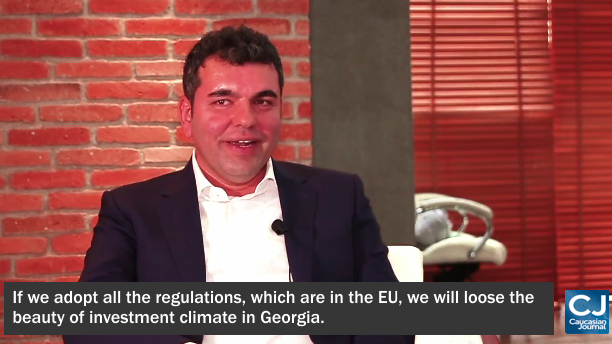
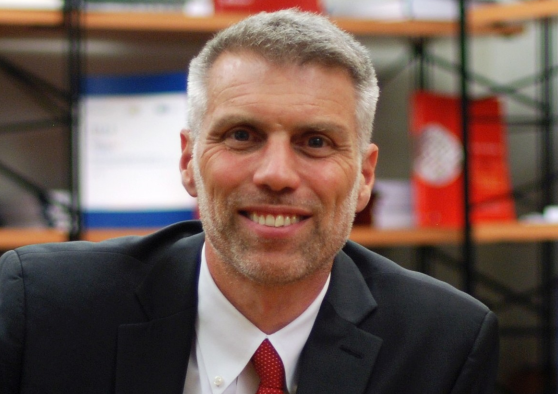
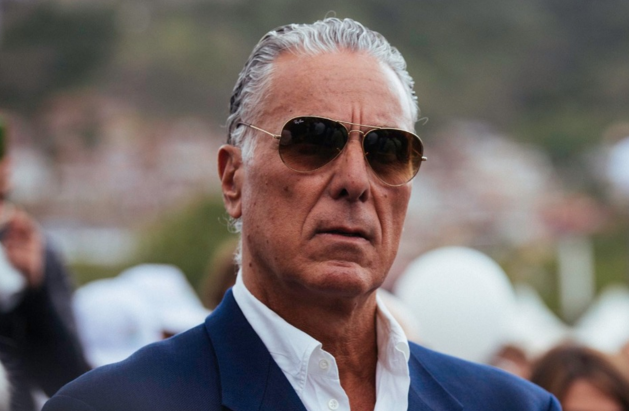
Showing posts with label Investors. Show all posts

Abdulaziz Zayed Al SHAMSI: "Georgia gains access to our global network and supply chains in more than 50 countries"

Abdulaziz Zayed Al Shamsi
09.10.2024 (Caucasian Journal). We are delighted to welcome Mr. Abdulaziz ZAYED AL SHAMSI, Regional CEO of AD Ports Group (United Arab Emirates). 

AD Ports Group is a leading global maritime and logistics company, based in Abu Dhabi. The company has recently acquired a majority stake in Tbilisi Dry Port, and we believe our readers would be keen to learn more about this project and its importance for Georgia and the wider region.

Alexander KAFFKA, editor-in-chief of Caucasian Journal: Dear Abdulaziz, welcome to our journal. Let's begin with your project in Georgia and then explore a broader international perspective. Your company has become the majority owner of Tbilisi Dry Port (TDP), which is scheduled to commence operations this October. For many readers, the term "dry port" might seem contradictory. Could you please explain what a dry port is and what types of operations will you be initiating this autumn?

Abdulaziz Zayed Al Shamsi (AZA): Certainly. A dry port is sometimes referred to as an inland port. The Tbilisi Dry Port (TDP) is an intermodal terminal directly connected by road and rail to a seaport. TDP is a custom-bonded terminal with procedures in place to ensure customs duties are levied and paid, and it is rail-connected. It’s a logistics hub that can move containers, vehicles, and other goods for distribution and storage. TDP is an excellent fit for AD Ports Group. Not only does TDP represent a major step in our strategic expansion along the Middle Corridor between Asia and Europe, but it is also centrally positioned. TDP offers direct westward rail links to Türkiye and Georgia’s ports of Poti and Batumi. To the East, TDP connects with ports located along the Caspian Sea via a railway corridor to Azerbaijan. We have said that we expect to be operational in Tbilisi in Q4, when TDP begins its activities as a regional transit hub for manufacturers, shippers, and consignees moving all types of goods.

Ambassador Ahmed ALNUAIMI: "I am fortunate to be posted to Georgia during this dynamic period of emerging relations between UAE and this strategically significant nation"

Ahmed Ebrahim Ahmed Taher ALNUAIMI
13.03.2024 (Caucasian Journal). It is an honour for Caucasian Journal today to welcome His Excellency Ahmed Ebrahim Ahmed Taher ALNUAIMI, the Ambassador of the United Arab Emirates (UAE) to Georgia.  

Alexander KAFFKA, editor-in-chief of Caucasian Journal: Your Excellency, welcome to Caucasian Journal, and thank you for finding time for our readers. Your ambassadorial term in Georgia started about a year ago, if I am correct. Probably you have already got substantial local experience. May I start by asking about your brightest moments in Georgia – maybe something unexpected, emotional, or even funny?

Ahmed ALNUAIMI: Serving as the Ambassador of the United Arab Emirates to Georgia has been a rewarding experience, affording me the opportunity to play a pivotal role in fostering collaboration between our two nations. My tenure so far here has been an extremely positive experience. The gracious hospitality extended to me by the Georgian people has made an indelible mark on my diplomatic mission.

Moreover, I have been impressed by the culinary delights that Georgia offers, and the scenic beauty of the country has been a continuous source of awe and inspiration throughout my work here. 

Tedo JAPARIDZE: "We, the Georgians, should be extremely rational, pragmatic and realistic!"

Tedo JAPARIDZE
07.07.2023 (Caucasian Journal) Today we are especially honored to meet with H.E. Tedo JAPARIDZE – one of the most experienced Georgian diplomats, former National Security Adviser and the Secretary of National Security Council, Minister of Foreign Affairs and chairman of the parliamentary Committee for Foreign Affairs. 

Mr. Japaridze also served as ambassador of Georgia to the United States, Canada and Mexico, and was secretary-general of the Organization of the Black Sea Economic Cooperation (BSEC).

Alexander KAFFKA, editor-in-chief of CJ:  Your Excellency, welcome to the Caucasian Journal. There are so many things to talk about that I would rather leave it up to you what to pick from today’s ample “menu”. Let’s perhaps start with your perception and state of mind: How would you summarize what you feel about the current moment, as a person, a citizen of your country? 

Tedo JAPARIDZE:  I am, indeed, very grateful that you invited me to talk. Since the early 1990s  after the dissolution of the Soviet Union and whatever was left after that colossal disruption, we have been discussing tortuously our mutual perspectives as the collapse of the USSR was so traumatic for all of us - to this day, it continues to define not only Russia's identity and its geopolitical imperatives but also of its immediate neighbors and far beyond, and naturally, of Georgia as well. Since that period, the entire world, including the post-Soviet space, has changed, turning from a no man’s land to something else, however, maybe still unclear to us. From a frightening stability of the “Cold War” up to the stages of “post-Soviet,” “post-modern,” “new normal,” “known unknowns” and “unknown unknowns” and many others, not well-defined and precise interpretations and rationale, especially of mental maps and landscapes, delusional ideas, predominantly, in tragic forms, and the brutal war in Ukraine reaffirms that distressing fact on the ground. 

Fady ASLY: "I'm very sad, but this can change quickly" (video)

04.05.2023 (
Caucasian Journal)  Fady ASLY, Chairman of the International Chamber of Commerce in Georgia (ICC Georgia), gave an extensive video interview to Caucasian Journal. 
The interview was linked to the recent appointment of Mr. Asly as chairman of the ICC Regional Consultative Group. However, besides the ICC's news, the conversation with Mr. Asly covered a broad range of Georgia's economic and political issues - from FDI to corruption, and from the judiciary system to the country's EU accession perspective. Watch the video talk below.

To be the first to view all our exclusive video interviews, please subscribe here to our YouTube Channel.


General Ben HODGES: "No way the US will pull out of NATO"

02.11.2020 (Caucasian Journal)  On the eve of U.S. presidential election, Caucasian Journal discusses the risk of America's withdrawing from NATO, verbalized recently by President Trump's former national security adviser. Though in Georgia it is also the election time, the NATO aspiration is not questioned by any party. But is NATO ready to accept new member?  
Our guest today is Lieutenant General (Retired) Ben HODGES, Pershing Chair in Strategic Studies at the Center for European Policy Analysis, Commander of United States Army Europe from 2014 to 2017.

Alexander KAFFKA, editor-in-chief of Caucasian Journal: Dear Ben, welcome to Caucasian Journal, many thanks for attention to our international readership. Obviously, one of our central discussion themes will be NATO-Georgia relationship. But let me start with something else, and even more fundamental: The NATO-USA relationship. President Trump’s former national security adviser John Bolton has more than once expressed his concern over a “very real risk” of the U.S. withdrawing from the North Atlantic Treaty Organization, if Donald Trump wins a second term. Can you comment on what seemed unthinkable? After all, 2020 had proved already that unthinkable things happen.

Lt. Gen. Ben HODGES:
No way the US will pull out of NATO, even if President Trump is re-elected. The Congress will oppose it, and I think that even the President realizes that the US needs allies, even if he doesn’t always say it or act like it. American prosperity as well as American security depends on a strong, stable, and prosperous Europe... That’s why we’ll remain committed to NATO, even if the President often says things about NATO that are unproductive. Of course it would also be helpful if other allies, particularly in Western Europe, would also demonstrate as much commitment to NATO as even the Trump administration has demonstrated. Despite the tweets, American boots on the ground in Europe have actually increased during this administration. I’d say that US commitment is far more tangible than some European allies. 
 

Sascha TERNES (video): "This moment gives a lot of opportunity for import substitution"

25.09.2020 (Caucasian Journal) How is the investment situation in Georgia assessed from a German business perspective? What types of investment projects seem most promising? What is German Business Association in Georgia, and how can it help?

Today our video discussion is with Mr. Sascha TERNES, Chairman of the German Business Association in Georgia (DWV), who agreed to answer Caucasian Journal's questions. 
 
This video interview was done in the framework of  our new EURICA project.

Watch video interview with Sasha TERNES below.

To be first to view all our exclusive video interviews, please subscribe here to our YouTube Channel.


Meni BENISH (video): "I never had in any country such a supportive government"

16.08.2020 (Caucasian Journal)  What factors make Georgia attractive to foreign investors, especially to the Israeli businesspeople? Which industry and agriculture sectors offer the most promising business opportunities? 

Mr. Meni BENISH is founder of Israel-Georgian Chamber of Commerce (IGCC), Honorary Consul of Georgia in Israel, and the head of several successful enterprises in Georgia, including the Archi Group. 

Last month he gave an interview to us focusing on establishment of IGCC. In his today's video talk Mr. Benish shares views on business environment in Georgia.

Watch video interview with Meni BENISH below.

To be first to view all our exclusive video interviews, please subscribe here to our YouTube Channel.


Giorgi PERTAIA (video): "Ideal investor is the one who brings knowledge to this country"

03.08.2020 (Caucasian Journal)  How do we see Georgia in 10 years, and which investment projects does it welcome? Is Georgia a post-Soviet country? Who are "ideal investors"?

Mr. Giorgi PERTAIA, President of Georgian Chamber of Commerce and Industry (GCCI), is answering the questions of Caucasian Journal. 

With the today's interview, Caucasian Journal starts to publish video interviews, which is a new format for us. We hope you like it!

Watch video interview with Giorgi PERTAIA below.

To be first to view all our exclusive video interviews, please subscribe here to our YouTube Channel.


Zaza BIBILASHVILI: "Democratic backsliding is evident"

Zaza BIBILASHVILI:27.07.2020 (Caucasian Journal)  How is the political and economic situation in Georgia seen from a viewpoint of one of the country's leading  professional lawyers?  

Today Caucasian Journal is pleased to present the answers given by  Zaza BIBILASHVILI, Senior Partner at BGI Legal, Georgia’s leading independent law firm, and founder of the Chavchavadze Center for European Studies and Civic Education. 

Alexander KAFFKA, editor-in-chief of Caucasian Journal: Dear Zaza, thank you for being with us, and for your attention to Caucasian Journal – we are privileged to have you among our Board members. Let me start with what I consider central. You possess a rare - if not ideal - combination of professional and personal qualities, which make you equal to political challenge of any caliber. Recently you left UNM - the party, which you joined in 2013, and where you held a senior position. You said you would not associate with any other political force or take part in the 2020 elections. I am sure you had important reasons, but what will remain on the plate for the voter, if all the very best professionals would decide to step away?

Zaza BIBILASHVILI: Alex, thank you for inviting me for this interview. The honor is all mine to be on CJ board along with such distinguished group of individuals. Let me start by wishing you and Caucasian Journal all the best. I know there are quite a few new ideas and plans for the immediate future. Look forward to seeing the Journal grow! On to your question: 

I joined UNM in 2013. Georgia’s former ruling party had already lost the 2012 parliamentary elections. It was widely demonized, its members were targeted politically and persecuted by all branches of government. Hundreds were jailed or forced to flee Georgia, and thousands were pressured in various ways. Against this background, many struggled to explain my move – in a country where people are quick to switch camps to join the winner, it is rare to see a successful citizen, who had never been part of the government and with no vested interest, to risk it all for no apparent gain. 

Seth CHAR: "It’s easy to start a business in Georgia but difficult to make it work"

23.07.2020 (Caucasian Journal)  Our guest today is Mr. Seth BLY-CHAR, CEO of ICONIA Capital, a real estate developer based in Tbilisi but owned by U.S. investors. (Read Georgian version here.)

Alexander KAFFKA, editor-in-chief of Caucasian Journal:  Dear Seth, welcome to Caucasian Journal! Our guests often talk about the importance of foreign investments for Georgia, the”investment climate”, “ease of doing business”, and other pretty abstract notions.  But today we have a chance to touch the practical side of things:  The hands-on experience of an American investor in Georgia. The fact that your experience is “mixed” makes it even more valuable to readers. For a start, can you give a short answer: Do you regret about investing your money in Georgia? If you could go back to 2015, would you rather have taken your investment elsewhere?

Seth CHAR: Mr. Kaffka, firstly, thank you for this opportunity to interview with your prestigious publication.  You had mentioned that our investor experience in Georgia was “mixed,” but in reality, it is only “mixed” on the best of days: overall, our experience in Georgia over the past five years has been overwhelmingly negative. 

Caucasian Journal and ICC Georgia to set up the first Eurasia Investment Channel, for worldwide promotion of best investment projects


14.07.2020. Below we republish an ICC Georgia's press release.

ICC Georgia to set up the first Eurasia Investment Channel, for worldwide promotion of best investment projects

EURICA (Eurasia Investment Channel and Analytics) is a joint project of ICC Georgia, Caucasian Journal and Channel Georgia Consulting.

Through EURICA, ICC Georgia will select and promote Georgia and the region’s best investment projects internationally, via global ICC network, YouTube, LinkedIn, printed mass medias and television.

EURICA will select the best investment projects and produce its own videos for them, to offer maximum promotion through international news distribution channels.

“The world is different in post -Covid era, and the winners will be those who are the first to adapt to new reality. Competition is increasing as many more companies are now seeking investments. At the same time, investors are also in dire need of lucrative new opportunities, after months of slowdown. Online and remote work is our new standard, resulting in faster communication and decision-making. We are introducing EURICA to offer unique investment promotion toolset not just to ICC members, but to all companies with sound, well-prepared investment projects,” – said Fady ASLY, Chairman of ICC Georgia.

Meni BENISH of Israel-Georgian Chamber of Commerce: "We can get financial support for any size of ventures"

13.07.2020 (Caucasian Journal) Israel is among the Georgia’s oldest and most reliable business partners. An essential support mechanism for healthy economic relations is a bilateral chamber of commerce, which, as a rule, must be established in both countries. 

Recently such a bilateral chamber has been finally introduced, after a lengthy period of registrations and endorsements in Israel and Georgia. Today Caucasian Journal talks with the head of new Israel-Georgian Chamber of Commerce (IGCC), Mr. Meni BENISH (Read Georgian version here.)

Alexander KAFFKA, editor-in-chief of Caucasian Journal: Dear Mr. Benish, thank you for attention to Caucasian Journal. When I heard about the launch of your Chamber of Commerce (CoC), I thought that we must cover this news, because Israel is such an important country for Georgia, and also because we partner with International Chamber of Commerce and other organizations promoting business participation in civil society. For businesspeople in Georgia, what is going to change with installation of your CoC? What new opportunities will open for an ordinary entrepreneur, and when?

Meni BENISH: First, I would like to thank you for the warm wishes. As you may know, I was born in Poti, and I am a Georgian citizen. Georgian people are close to my heart and I can clearly say that I feel at home in Tbilisi.

Ambassador Ran GIDOR: "We’ve been spending too much time toasting each other"

13.06.2020 (Caucasian Journal) Today Caucasian Journal has the honour to talk with the newly appointed Israeli ambassador to Georgia, Mr. Ran GIDOR. His term in Tbilisi started last January. 

Mr. Gidor is not a newcomer in Georgia: Being a career diplomat, he was appointed as deputy ambassador in Tbilisi (accredited to Georgia and Armenia) back in 1997. His subsequent experience included positions of Cultural and Academic attaché in Beijing, Political Counsellor in London, Director of UN Political Affairs Department, and Ambassador to Cameroon, the Central African Republic, Equatorial Guinea, Congo and Gabon.

Alexander KAFFKA, editor-in-chief of Caucasian Journal: Your Excellency, welcome to Caucasian Journal, we thank you for attention to our readers. I know it became commonplace to talk about the coronavirus, but in your case I cannot help asking: How does it feel to start an Ambassador’s term in an unprecedented lockdown? I understand that just weeks after arrival in Tbilisi you found yourself isolated at home and unable to travel, being cut from essential parts of every diplomat’s work.

Ran GIDOR: Thank you, Alexander, for the opportunity to address your readers. Yes, you’re absolutely right, COVID-19 has “turned the tables” (so to speak…) on all our original work plans for 2020 and forced us to cancel virtually every major project in the pipeline. However, now we’re ‘regrouping’ and learning how to implement some new ideas in innovative and unconventional ways. As always, what starts as a threat or a disaster – can be turned into an opportunity, if we’re prepared to rise to the challenge.

Bjorn BRANDTZAEG: "As Georgia develops, it needs more domestically generated electricity"

09.03.2020 (Caucasian Journal). Our journal continues its new program of interviews "BEST NORDIC AND BALTIC PRACTICE" with high-level practitioners from Western Europe who share their knowledge in areas most relevant to our region. 

Our today’s guest is not only highly competent in his area – renewable energy – but also has many years of hands-on practical experience in Georgia. 

Bjørn BRANDTZÆG (or Bjorn Brandtzaeg on devices without Norwegian characters) is founder and CEO at Clean Energy Group, the biggest Norwegian investor in Georgia. He has been involved in Georgia’s hydropower projects since the early 2000s.

Alexander KAFFKA, editor-in-chief of CJ:  You have a rare experience as a Westerner who has started a successful large-scale business in Georgia “from zero”, and worked under several different governments. Do you sometimes feel that your experience is a very valuable asset, sharing which may be beneficial to many people, and to the country in general? 

Bjørn BRANDTZÆG: I have been working with the development of the Georgian hydropower resources for many years, first as a government adviser funded by the Norwegian government and later as a project developer. I have seen the sector and projects evolving. As we have experienced in the Shuakhevi project [Shuakhevi Hydro Power Plant (HPP) is a run-of-the-river plant in Adjara, completed in 2017 - CJ], large hydroprojects are very challenging to develop and it is not possible to predict all the challenges a project will face when you start them. You need a very strong commitment to see them through.
            
AK: If yes, what are the most important lessons, which you would like to “teach”?

BB: The key lesson is that sustainability aspects have to be incorporated from the start in the project development. Unless people affected by the project development and the environment are taken good care of from the start, it is very challenging to progress with a project.

Sebastian MOLINEUS of World Bank: "Let’s work together to eradicate poverty once and for all"

How important is the South Caucasus region for global organizations such as the World Bank? How does World Bank prioritize activities in the three countries of the region?  These and other questions from global and regional agenda are in our focus today.

31.10.2019 (Caucasian Journal). Our today’s talk is with Sebastian MOLINEUS, the new World Bank Regional Director for the South Caucasus, appointed last June. 


Alexander KAFFKA, editor-in-chief of CJ:  Dear Mr. Molineus, many thanks for this opportunity and for your time. First of all, please accept congratulations with your appointment to Tbilisi, welcome to this beautiful city! Do I understand correctly, that World Bank’s office in Tbilisi in fact oversees the activities not only in Georgia, but also in all three countries of our region? I believe this is rather challenging job, as it requires quite a lot of travel. Can you summarize your overall experience so far – from your first months in the Caucasus?

Sebastian MOLINEUS: Dear Mr. Kaffka, thank you for inviting me to this interview – I am honored to do so for this prestigious journal! – and for the warm congratulations for my appointment as Regional Director for South Caucasus, i.e. Armenia, Azerbaijan, and Georgia.  In terms of first experiences, and I purposefully mention first that, as I’ve only been on the job for a few months, I would like to highlight the strong commitment to reforms I have been able to see first-hand by all three country governments. Second, the strong macro-economic fundamentals that have been put in place, in other words the foundation to build sustainable and inclusive economic growth.  And third, the willingness to embrace innovations and the opportunities the digital economy brings. Last but not least, I would be remiss if I didn’t mention that everything I had heard in abstract about the famous hospitality and generosity of the people in the South Caucasus, and of course the amazing food and exquisite wine of the region, is 100% and absolutely true! 

Open letter to International Community

30.08.2019. Fady Asly, chairman of International Chamber of Commerce Georgia (ICC), sent an open letter to the international community. "Georgia is an amazing country with great potential; it hurts a lot to see it sliding backward so quickly, losing its leading position in the region and globally as a role model of good governance and economic development", - reads the open letter from the head of Georgia's largest business association. 

Caucasian Journal is publishing the full text of Fady Asly's letter in English below. The full text in Georgian can be found in our Georgian language version.

Open letter to the International Community


Dear members of the International Community,

We have learned from the press on August 27, that the Prosecutor General of Georgia had sent a letter to the UK Authorities requesting them to freeze the bank accounts of two Georgian businessmen, Mamuka Khazaradze and Badri Japaridze on the ground of “alleged money laundering”.

Fady ASLY of ICC Georgia: Georgia has lost attractiveness for foreign investors

Is the business climate now getting any better? Do investors get adequate protection?  Is it a good time to start business in Georgia? 

17.04.2019 (Caucasian Journal). Our today’s guest is Fady ASLY, Chairman of the International Chamber of Commerce (ICC Georgia). Since its launch in 2002, ICC has not only been a top executives’ club, but often a shelter for mistreated businesspeople, where they could find efficient support. 

Caucasian Journal’s readers are the first to hear Mr. Asly’s answers.

Alexander KAFFKA, editor-in-chief of Caucasian Journal:  Dear Fady, first of all, thank you for your support to Caucasian Journal and attention to our growing readership. Though you are not Georgian, you are widely popular in this country. Many people know you as a leader of business associations, an entrepreneur, and even an original writer. But let us imagine you are facing an unfamiliar audience. How would you explain why you care so much about Georgia? 

Fady ASLY: When I woke up early in the morning of April 28, 1998, hours after my first ever arrival to Georgia, I opened the balcony door of my hotel room and was taken aback by the beauty of the landscape, Mtatsminda’s amazing green hill with its small red-roofed mushroom houses under a clear and bright blue sky.